The only question to start with
Do you want to leave the house for this, or not? That is the whole decision. Everything else is detail, and none of it is permanent.
-
Without leaving home
Virtually
By telephone, on Zoom, or on Microsoft Teams. No travel, no waiting room, and nothing that costs you energy before the hour has even started. Anywhere in British Columbia.
You choose which of the three -
In the same room
In person
A room in Vancouver, step-free, with time built in either side so that arriving is not a rush and leaving is not a shove.
You choose when, and how often
You are not choosing once. Start virtually and move into the room later, or the other way round, or switch back and forth depending on the week, the weather, or how much you have in you that day. You never have to justify it, and nobody keeps score.
Side by side, including what each one is worse at
Any site can tell you both options are wonderful. Here is where each actually costs you something.
| Virtually | In person | |
|---|---|---|
| What you need | A telephone, or a link and some data. Nothing to install and no account to make. | To get to the room, and the time either side of the hour that the journey takes. |
| Where you can be | Anywhere in British Columbia with a door that closes — or a parked car, or a walk, if home is not private. | Vancouver. |
| What it is best at | Actually happening. It survives a bad pain day, a childcare collapse, a snowstorm and a bus strike. And a good many people find it easier to say the hard thing when nobody is looking at their face. | Bodies in the same space. For some kinds of trauma work that matters, and for some people nothing substitutes for it. |
| What it is worse at | Reading each other. Both of us have to say more out loud. A poor connection is its own small stress. | Costing you energy, money and travel before the session starts — which for some people is the entire reason to choose the other one. |
| Changing your mind | Any time, no notice needed, no reason required. | Any time, no notice needed, no reason required. |
If you choose virtually
Three ways to do it, and they are the same session
Pick whichever is easiest to actually do, not whichever seems most proper. You can use a different one next week.
Someone at home mid-session — a laptop or a phone on a kitchen table, a mug, a closed door. Ordinary and private, not a stock-photo office.
media/sessions/virtual-01.jpg
Landscape 21:9 · 1800px wide or more · under 400KB
-
By telephone
The lowest-barrier way to do this, and the one that gets undersold. No camera, no app, no account, no bandwidth. It is also the most private: a call leaves no window open on a shared computer and no icon in anyone’s taskbar.
Needs: a telephone -
On Zoom
A link and a time. Join from the app or a browser tab, no paid account required. Your camera is yours — turning it off for part of a session, or all of it, is normal and needs no explanation.
Needs: a link, and data -
On Microsoft Teams
Offered because a lot of people already live in Teams through work, school, or a settlement agency — and on a hard day the familiar thing is worth a great deal. You can join in a browser without a Microsoft account.
One caution. If Teams is on a device your employer or school manages, treat that device as theirs. Join from a personal one.
Needs: a link, and data
If you choose in person
The room, and how to get into it
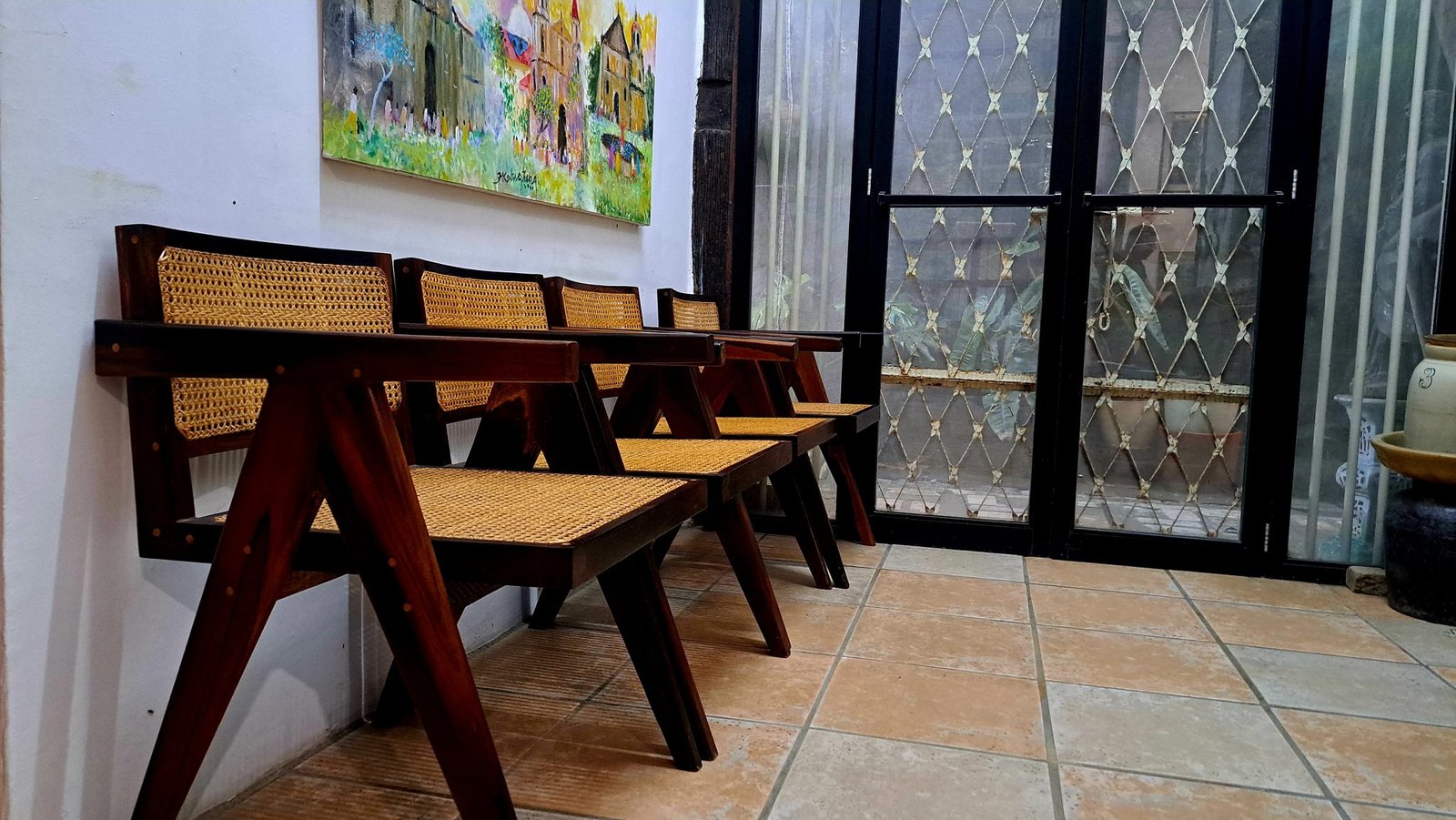
THE APPROACH — the entrance from the pavement, showing the step-free route in and how wide the door is. Take this one even if you take no others.
media/access/entrance-01.jpg
Landscape 3:2 · 1600px wide or more · under 400KB
To be confirmed before launch
The address, and the access description that goes with it. Left empty rather than guessed, because access information that turns out to be wrong is worse than none: someone plans a journey they cannot actually make.
What belongs here: the street address and nearest transit; step-free entry and how to find it; door widths; whether the door is powered; the accessible toilet and which floor it is on; lift dimensions if there is a lift; parking, including accessible parking; scent policy; and whether a support person or service animal is welcome (they are).
Access
Access is not a footnote here.
I use a wheelchair. Nothing about getting into a room, getting through a door, or getting a straight answer about whether a building will actually work for you is theoretical at this practice.
So ask. The ramp, the lift, the toilet, the parking, the lighting, the noise, how long the corridor is. None of it is a fuss, and you will get a specific answer rather than the word “accessible”, which on its own means almost nothing.
If travelling costs you more than the session gives back, that is not a failure of effort. That is arithmetic, and it is exactly why the other door exists.
Virtual sessions are not the consolation prize. For someone managing pain, fatigue, a wheelchair and a bus route on the same morning, they are frequently the option that makes the work possible at all.
Privacy, plainly
What happens to what you say
Sessions are not recorded. Not on video, not on audio, not by transcription software. If that were ever to change for any reason, it would be with your written consent first, and you could say no and still have the session.
The platforms. Zoom and Microsoft Teams both encrypt meetings in transit. Neither is used with a recording feature, a transcription feature or an AI meeting assistant turned on. Telephone calls travel over the ordinary phone network, which is not encrypted end to end — that is true of every phone call anyone makes, and it is worth saying rather than glossing over.
Your side of the connection is the part neither of us controls — a shared computer, a work laptop, someone in the next room. If privacy at home is difficult, say so at the start and we will plan around it.
To be confirmed before launch
The full privacy statement, and how records are kept. What is written in a session note, where notes are stored, how long they are kept, and the practice’s obligations under British Columbia’s Personal Information Protection Act. This must be Ali’s own statement about his own record-keeping, checked against current CCPA ethical requirements — not a template.
The limits of confidentiality are written out here, in plain terms, before you start rather than after.
Still not sure which one?
Then start with a fifteen-minute conversation, whichever way is easiest today, and work it out from there. Choosing wrong is not a thing that can happen here: you can change at any point, and people often do.